What is Buddhism?

Buddhism is a path of practice and spiritual development leading to Insight into the true nature of reality. Buddhist practices like meditation are means of changing yourself in order to develop the qualities of awareness, kindness, and wisdom. The experience developed within the Buddhist tradition over thousands of years has created an incomparable resource for all those who wish to follow a path — a path which ultimately culminates in Enlightenment or Buddhahood. An enlightened being sees the nature of reality absolutely clearly, just as it is, and lives fully and naturally in accordance with that vision. This is the goal of the Buddhist spiritual life, representing the end of suffering for anyone who attains it.


Because Buddhism does not include the idea of worshipping a creator god, some people do not see it as a religion in the normal, Western sense. The basic tenets of Buddhist teaching are straightforward and practical: nothing is fixed or permanent; actions have consequences; change is possible. So Buddhism addresses itself to all people irrespective of race, nationality, caste, sexuality, or gender. It teaches practical methods which enable people to realise and use its teachings in order to transform their experience, to be fully responsible for their lives.

Stack of stones.

Who was the Buddha?

Buddhism started with the Buddha. The word ‘Buddha’ is a title, which means ‘one who is awake’ — in the sense of having ‘woken up to reality’. The Buddha was born as Siddhartha Gautama in Nepal around 2,500 years ago. He did not claim to be a god or a prophet. He was a human being who became Enlightened, understanding life in the deepest way possible.


Siddhartha was born into the royal family of a small kingdom on the Indian-Nepalese border. According to the traditional story he had a privileged upbringing, but was jolted out of his sheltered life on realising that life includes the harsh facts of old age, sickness, and death.


This prompted him to puzzle over the meaning of life. Eventually he felt impelled to leave his palace and follow the traditional Indian path of the wandering holy man, a seeker after Truth. He became very adept at meditation under various teachers, and then took up ascetic practices. This was based on the belief that one could free the spirit by denying the flesh. He practised austerities so determinedly that he almost starved to death.

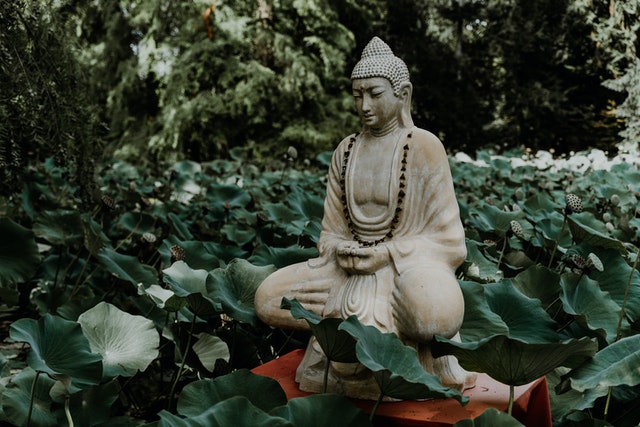
Buddha statue.

What is meditation?

There are many things in life that are beyond our control. However, it is possible to take responsibility for and to change one’s state of mind. According to Buddhism this is the most important thing we can do, and Buddhism teaches that it is the only real antidote to the anxiety, hatred, discontentedness, sleepiness, and confusion that beset the human condition.


Meditation is a means of transforming the mind. Buddhist meditation practices are techniques that encourage and develop concentration, clarity, emotional positivity, and a clear seeing of the true nature of things. By engaging with a particular meditation practice one learns the patterns and habits of the mind, and the practice offers a means to cultivate new, more positive ways of being. With discipline and patience these calm and focused states of mind can deepen into profoundly tranquil and energised states of mind. Such experiences can have a transformative effect and can lead to a new understanding of life.

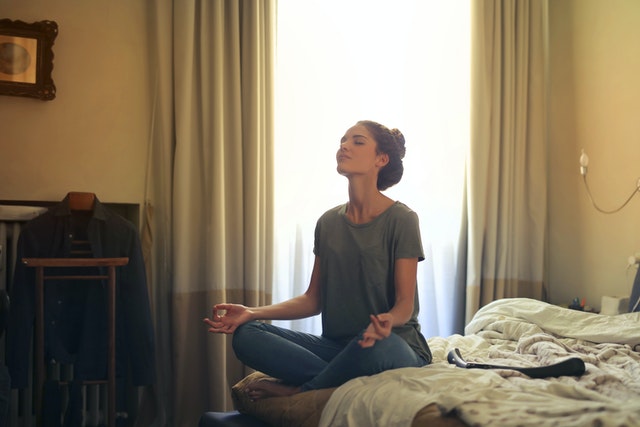
Woman meditating in bedroom.

What is Metta Bhavana Meditation?

Buddhism is a path of practice and spiritual development leading to Insight into the true nature of reality. Buddhist practices like meditation are means of changing yourself in order to develop the qualities of awareness, kindness, and wisdom. The experience developed within the Buddhist tradition over thousands of years has created an incomparable resource for all those who wish to follow a path — a path which ultimately culminates in Enlightenment or Buddhahood. An enlightened being sees the nature of reality absolutely clearly, just as it is, and lives fully and naturally in accordance with that vision. This is the goal of the Buddhist spiritual life, representing the end of suffering for anyone who attains it.

What is the Mindfulness of Breathing Meditation?

Buddhism started with the Buddha. The word ‘Buddha’ is a title, which means ‘one who is awake’ — in the sense of having ‘woken up to reality’. The Buddha was born as Siddhartha Gautama in Nepal around 2,500 years ago. He did not claim to be a god or a prophet. He was a human being who became Enlightened, understanding life in the deepest way possible.